
LPDDR4 (Low Power DDR4) memory modules are relatively new to the smartphone market, but we've already seen its speed sprint ahead of older LPDDR3 RAM. Samsung has announced its new 12GB LPDDR4 modules with clockrate upto 4266MHz. But the exact bandwidth will depend upon the channel configuration. Each LPDDR4 die die contains two 16-bit channel which means a dul-die system configuration would offer 64-bits of memory bandwidth per cycle. As a result you will get 32 GB/s bandwidth more than that of high end PCs.

DDR4 memoryb modules in PC has a wider bandwidth pipe and lower clock speeds, but also depends on RAM bandwidth than their mobile counterparts. Mobile CPUs always integrated with an onboard GPU and typically have much smaller CPU caches than in Desktop chips, which puts correspondingly greater pressure on mobile Memory bandwidth. PC DDR4 speed are expected to creep upwards over the next few years to atleast DDR4-3200, while LPDDR4 was originally expected to peak at 4266 MHz .. This might be extended 1-2 speed grades, given that samsung is already launching 20nm Memory modules at this clockrate.
The other advantage of these new 20nm chipset is that they have doubled the capacity of the previous modules. 3GB DRAM can be now stacked in chips, while 6GB can be stacked in four. That's a notable improvement occurred compared to previous. *GB LPDDR4 ICs and these new 12GB chips are clocked higher as well. This proven the way for smartphones upto 6GB of RAM. But, it is not clear that whether companies are ready to move immediately to take its advantage or not.
The LPDDR4 memory chipsets had improved much better than older LPDDR3.
Significant changes include:
Anyway, adding RAM to the smartphone can theoretically buffer the device against memory leaks and bugs, like those that affected Lollipop earlier this year. But also, adding more memory to the smartphone will led to the over power consumption. Nowadays many of the big budget smartphones are coming with 4K displays and with a pixel density of above 800ppi. But I think that it is only wastage of money and power. 6GB memory modules and 4K displays will wipe the battery life improvement that companies can offer - and since phone batteries have actually been getting smaller in recent years, the end result will not be kind to your high-end device's ability to make it throughout a day of usage.
Source : pure pc
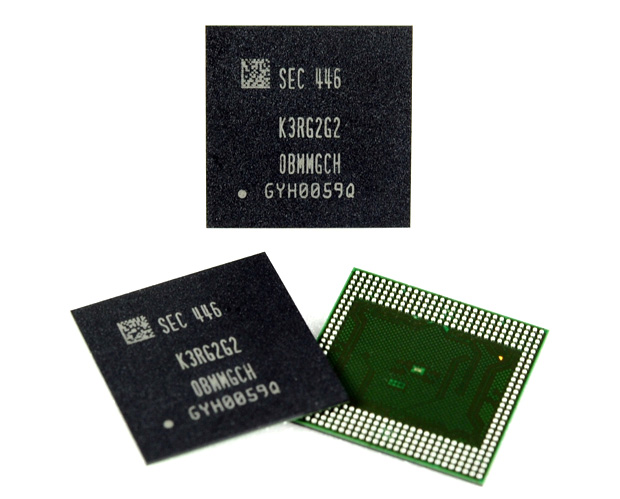
DDR4 memoryb modules in PC has a wider bandwidth pipe and lower clock speeds, but also depends on RAM bandwidth than their mobile counterparts. Mobile CPUs always integrated with an onboard GPU and typically have much smaller CPU caches than in Desktop chips, which puts correspondingly greater pressure on mobile Memory bandwidth. PC DDR4 speed are expected to creep upwards over the next few years to atleast DDR4-3200, while LPDDR4 was originally expected to peak at 4266 MHz .. This might be extended 1-2 speed grades, given that samsung is already launching 20nm Memory modules at this clockrate.
The other advantage of these new 20nm chipset is that they have doubled the capacity of the previous modules. 3GB DRAM can be now stacked in chips, while 6GB can be stacked in four. That's a notable improvement occurred compared to previous. *GB LPDDR4 ICs and these new 12GB chips are clocked higher as well. This proven the way for smartphones upto 6GB of RAM. But, it is not clear that whether companies are ready to move immediately to take its advantage or not.
The LPDDR4 memory chipsets had improved much better than older LPDDR3.
Significant changes include:
- Doubling of the interface speed, and numerous consequent electrical changes, including changing the I/O standard to low-voltage swing-terminated logic (LVSTL)
- Doubling of the internal prefetch size, and minimum transfer size
- Change from a 10-bit DDR command/address bus to a 6-bit SDR bus
- Change from one 32-bit wide bus to two independent 16-bit wide buses
- Self-refresh is enabled by dedicated commands, rather than being controlled by the CKE line
Anyway, adding RAM to the smartphone can theoretically buffer the device against memory leaks and bugs, like those that affected Lollipop earlier this year. But also, adding more memory to the smartphone will led to the over power consumption. Nowadays many of the big budget smartphones are coming with 4K displays and with a pixel density of above 800ppi. But I think that it is only wastage of money and power. 6GB memory modules and 4K displays will wipe the battery life improvement that companies can offer - and since phone batteries have actually been getting smaller in recent years, the end result will not be kind to your high-end device's ability to make it throughout a day of usage.
Source : pure pc
No comments:
Post a Comment